When Your Life Depends On It by Kitty Bucholtz
April 9, 2020 by Kitty Bucholtz in category It's Worth It by Kitty Bucholtz, Writing tagged as Kitty Bucholtz, life choices, podcasts, Write Now Workshop Podcast, writing nonfictionI had the most interesting conversation this week with Brad Borkan. He co-authored the book, When Your Life Depends On It, about Antarctic explorers of the early 20th century. At first, I didn’t think I’d find this very interesting at all; I just wanted to interview him to talk about writing nonfiction.
But boy, was I wrong! Brad studied decision sciences and works during the day with a major software company understanding how businesses and people make decisions. He wrote his book as a study of how these explorers made so many life and death decisions – and stayed alive most of the time. And then he showed us how to apply those lessons to our own lives.
I think you’ll find this episode really interesting, just like I did! I hope you enjoy it. 😀
FIRST QUARTER RESULTS
April 5, 2020 by Tracy Reed in category Pink Pad by Tracy Reed, Writing tagged as publishing, results, writingHappy April and Happy Birthday to me. Today’s my birthday and I am celebrating at a very intimate and exclusive restaurant, my house.
There is no need to rehash or complain about what we are all enduring. Here’s my only comment or prayer, we are all victorious survivors and can endure more than we can imagine.
I’m going to keep it short this month.
I just finished my first quarter as a planner girl. It has been an amazing experience. I’m a lot more focused and I’m amazed at how much I got accomplished. There are some tools I really like and some that I didn’t. At least right now. I might revisit the ones that didn’t fit later. I will only be discussing the planning tools I’m using for my author business.
Tool: Kanban Board
I’m not going to say I love this just yet, but I really like it. It helped a lot to see my tasks in front of me daily. It also forced me not to bite off more than I could chew. When I put this in place, I was going to write a different book. About two weeks into the first 30 days, the book I scheduled just wasn’t. I switched books and the words flowed like a faucet. In fact, the book went from novella to novel length.
There were a few things that were moved because it involved the book I was no longer working on. My math might be a little off but here are the results. I started the year with 3 goals and 59 tasks. I complete the goals. I realize those are going to take a little longer than expected. The goals had 59 tasks. I completed 32 tasks, 15 didn’t get done and 7 were carried over.
As of this posting, I’m working on next quarter’s Kanban board.
Tool: Ads
I have been meaning to try Fussy Librarian and just hadn’t gotten around to it. However, I received an email offering me a chance to try them for free with a free book. I did and ad day produced great results. My book got to #4 in a couple of categories and in the top 100 with another one. The tails on the ad lasted about a week. I will definitely be trying them again.
I have an official ad budget and I’ll let you know how it’s working at the end of the quarter. I think I need 90 days to really assess the results. I am currently in the first stage, testing facebook ads. This is an area I really want to crack. I have spent too much time and money on courses for them not to work.
Tool: Planner Inserts
I have been testing a mixture of planner inserts searching for the ones that are right for me. I think I have a system I like. I’m not the planner who likes a lot of stickers. Although I did see some last week that I really like. I do use colored transparency tabs and some dots.
I created an engagement log sheet which I use weekly to chart my sales, word count and social media followers. This has helped me. When I write things down, it helps me visualize and push myself. Or know when to take a break.
Tool: Author Planner
My author planner is really a business bible. It contains a calendar, production schedule, newsletter and ad schedule, expense and sales log, print book inventory and event schedule. This is very handy. I use it in conjunction with my 90 Day Plan notebook. Any story ideas are kept in a separate notebook by my bed.
Tool: Instagram…Social Media
I did an online course on building your Instagram audience for my lingerie business and tried it with my author business. It works well for the lingerie, but not as well for my author business. I’m thinking about trying Planoly to schedule my author posts. When I post on Instagram, I make sure to click the other social media options. This helps me stay engaged and post regularly. Interesting thing, when I post a shirtless man, I get great engagement. Go figure.
WIP…as of this post, I am approximately 4500 words away from completing my book. I know last month I said I was about 7000 words away from completing my book. That was true. However, the story took a turn and I added a few more thousand words. I really thought I would have finished it sooner. But the delay has worked to my advantage. I’m not sure how a release would have done right now.
I’m not sure what I’ll talk about next month. Let’s play it by ear.
Happy April. Stay safe.
Are All Editors Created Equal?
March 31, 2020 by The Extra Squeeze in category The Extra Squeeze by The Extra Squeeze Team, Writing tagged as children's book editors, Editors, Fiction editors, non fiction editors
Dear Extra Squeeze Team,
Are all editors created equal? Do you need one type of editor for adult fiction, and a different type of editor for a picture book?

Rebecca Forster
USA Today Bestselling author of 35 books, including the Witness series and the new Finn O’Brien series.
Not only are all editors are not created equal, there are many people are promoting themselves as editors even though their only credentials are that they like to read and they were good in English. So, before you spend a ton of money are a few things to think about.
1) Do you need a story editor, a line editor or just someone to double check for typos? Personally, I always need a story editor. My books are intricate, and I am known for twists and turns. A story editor* keeps me on track with red herrings, challenges me to push the envelope, and gives me perspective on the plot/story as a whole. I couldn’t live without this input.
2) Overall editors are hard to come by in my humble opinion unless you are willing to pay the price. It is no easy job to take a book from start to finish when you’re an editor. When I was traditionally published, I often had three separate editors, each charged with perfecting a different part of the process. If you’re looking for just that one person, make sure you are clear up front so they can price their bid accordingly.
3) An editor works for you and you should select one carefully. I tested a reader who swore she was an editor. She had found some things in a published book, and I was impressed with the detail and her attitude. However, when I sent her test pages (for which I paid her), she missed the typos and grammar issues that I purposefully left in to gauge her level of expertise. She was a great reader and had caught some mistakes, but she was not an editor.
4) When you find a great editor, it is a thing of beauty. Remember, some are literally brilliant* and the good ones will be able to work on any book in any genre. This is because they understand that individual marketplaces call for different sensibilities. They will read a romance differently than they read a mystery. If you find one of those, hang on to her/him.
*For transparency, the fabulous story editor I have worked with since my first book is my Extra Squeeze colleague, Jenny Jensen.
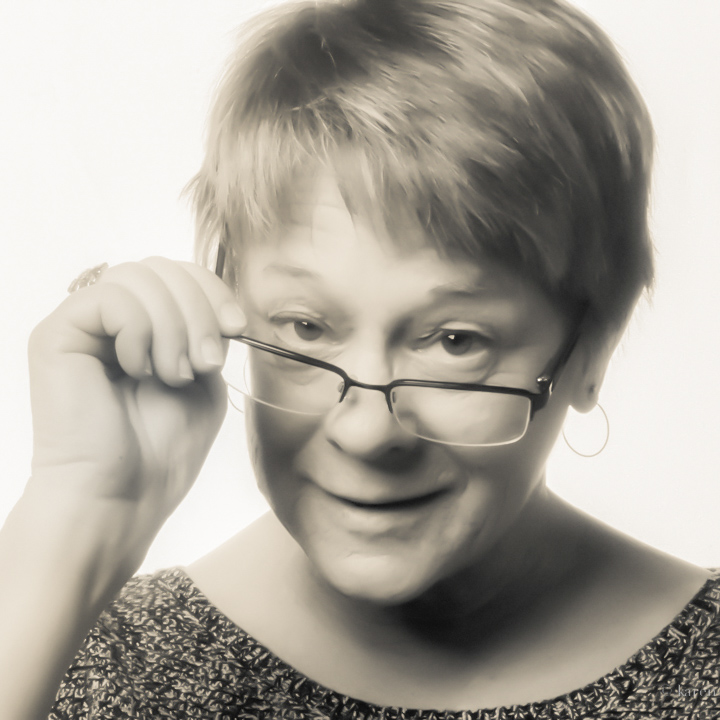
Jenny Jensen
Developmental editor who has worked for twenty plus years with new and established authors of both fiction and non-fiction, traditional and indie.
All editors are created as equally as all dancers, or singers, politicians or writers, but that’s not really what you’re asking. A good editor wears different hats, each for different genres. And then there are the specialists who focus their skills, most notably in academics, poetry and children’s literature.
I’ve worked on USAF manuals, fiction of all flavors, history and biography and business materials. I wore a different editing hat for each. A lot of the rules are the same, but each genre has a different intent and any useful editing must be done with that intent top of mind. The flow, pacing and characterization of a thriller are light years from those of business material (though maybe marketers should rethink that). Each of those hats comes with my confident understanding of the author’s intent so I can see any problems and add to the intended message. I think this is true of most editors.
I’ve turned down work twice. The first was a treatise on the physics of string theory. At least that’s what I think it was. I had no hat for this and so could offer nothing but a suggestion for a more suitable editor. The second was a children’s picture book. I love children’s books. I read the manuscript and tried to find a hat that fit. I soon realized this required a special knowledge, an insight into the reader’s mind and the author’s intent; knowledge and insight for which I don’t have a hat.
So yes, I do think that an author of a children’s picture book should find and build a relationship with an editor whose specialty is children’s lit. That doesn’t mean she would be better created, just that she was the best at dancing and singing to that tune.
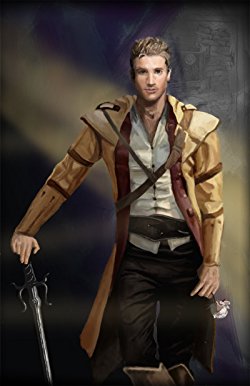
H.O. Charles
Cover designer and author of the fantasy series, The Fireblade Array
I would say it depends on the experience of the editor. Some are quite capable of understanding the different styles and switching accordingly. Some are not. Look at the work they’ve previously done and see how it aligns with your own.
That said, sometimes an editor from another genre can bring a fresh perspective that could help you break away from the norm and set your work apart from that of other writers. Great books are often ones that cross genres and re-purpose other styles.
Ever wonder what industry professionals think about the issues that can really impact our careers? Each month The Extra Squeeze features a fresh topic related to books and publishing.
Amazon mover and shaker Rebecca Forster and her handpicked team of book professionals offer frank responses from the POV of each of their specialties — Writing, Editing, PR/Biz Development, and Cover Design.
March Releases
March 17, 2020 by marianne h donley in category WritingTwo new releases for March
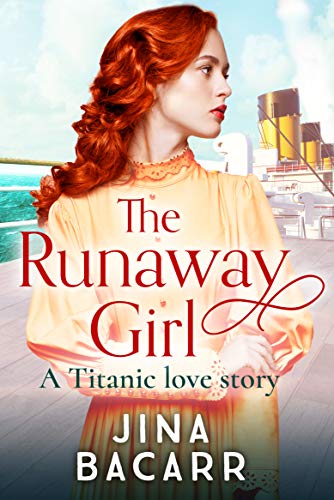
First up is Jina Bacarr’s The Runaway Girl
Two women hold the keys to his heart. Only one will survive that fateful night…
A sweeping, emotional historical romance set aboard the Titanic, perfect for fans of Gill Paul and Suzanne Goldring.
This is a revised and fully updated edition of a novel previously published as Titanic Rhapsody.




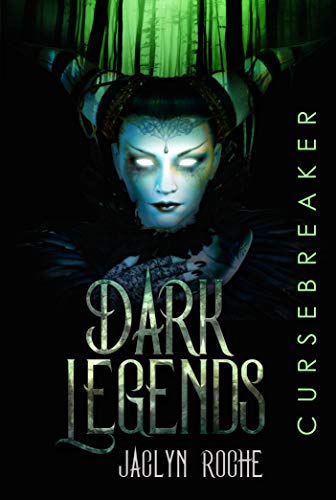
Next we have a dark fantasy compelling dark fantasy novella by International Bestselling Author, Jaclyn Roche.
A reincarnated goddess…
An unrisen long-dead god…
Only she can bring him back to life.
0 0 Read more
My Titanic Love Story pubs March 17th… The Runaway Girl will run away with your heart by Jina Bacarr
March 11, 2020 by Jina Bacarr in category Jina’s Book Chat, Writing tagged as BookBub, giveaway, Titanic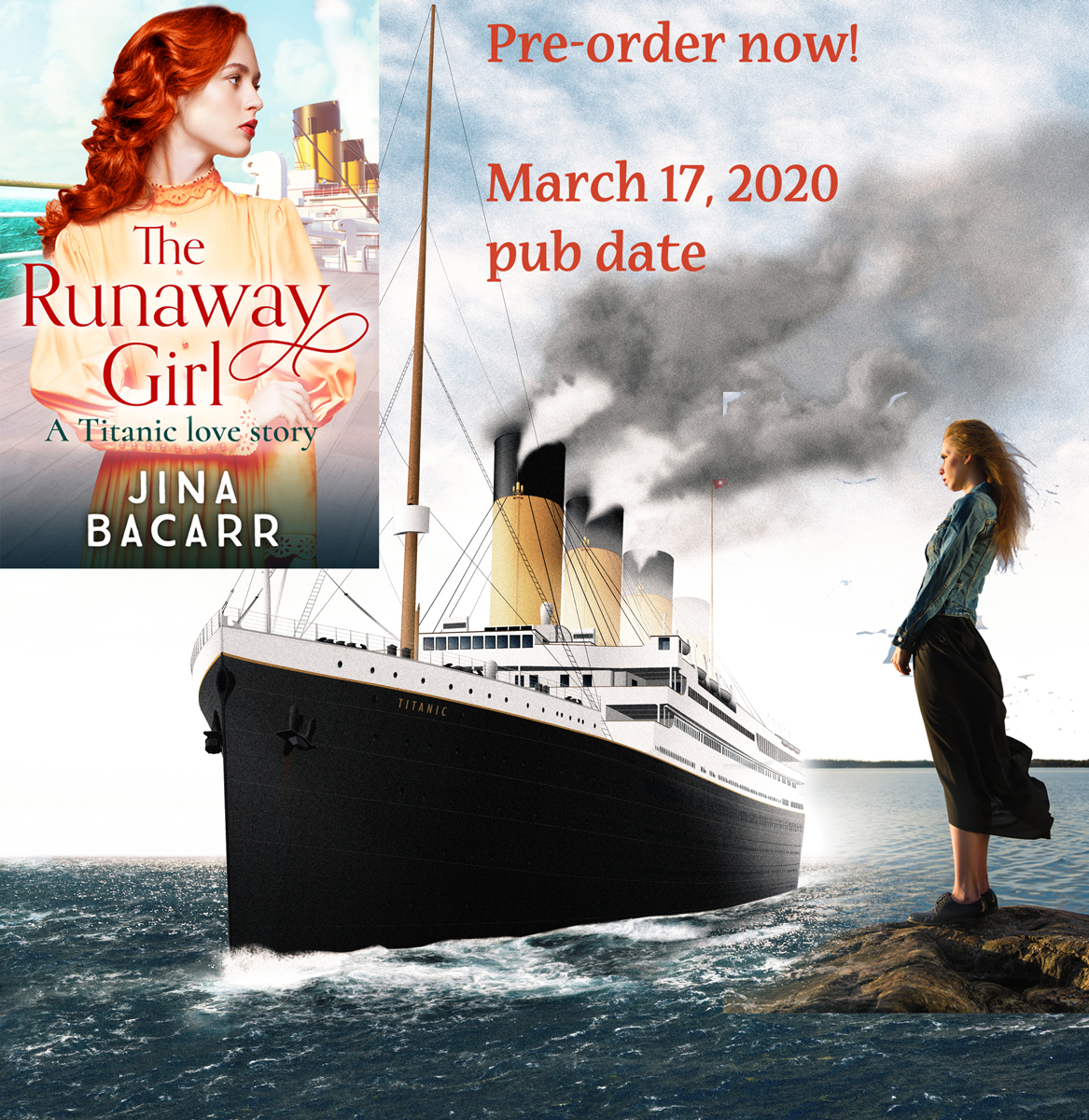
I’m excited to announce that my Titanic love story, THE RUNAWAY GIRL, will be published on March 17th.
———–
Reviews.
You either love them or cringe…. but they’re part of the business.
Kind of like you see in the old black and white films when the actors, director, and producer all gather at a famous restaurant, drink coffee and cognac, and wait for the early morning reviews in the daily newspapers…
There was something romantic about those days when we waited for print reviews. Smiling when they’re good, sighing when they’re not, but always grateful someone took their time to give us their honest opinion. You grow as a writer from reviews… all of them.
Now you can get a review in an instant on your smartphone.
It’s enough to keep a writer up at nights, sleeping with her phone by her side, waiting for that inevitable beep or chime that signals we’re about to celebrate with double chocolate brownies or go back to the drawing board with cold coffee at our side till we get it right.
And sometimes we do get it right.
I’m excited to say THE RUNAWAY GIRL has received amazing reviews:
‘A fantastic Titanic take woven in with a great portrayal of love, friendship, and even forgiveness. I would have rather seen this as a movie than the Jack and Rose story!!!’
‘… the writing was very good and so detailed that it felt like it was all so believable, and could really have happened. This was my first book to have read by this author but she managed to take me on an epic journey with her characters which I totally fell in love with.’
‘I loved, loved this book so much!!!’
‘This was such a good story, the characters were so compelling and you become so invested in them you want to keep reading even way after the story ends!’
‘The Runaway Girl is a mesmerizing romance that any reader (like me) that loves all things Titanic will adore.’
‘What a fantastic storyline the characters were compelling and I loved this story couldn’t put it down it was so well written, loved it’
‘From start to finish I was enchanted with the story and the characters and all the finer details describing the ship, clothes and scenery.’
‘The Runaway Girl: A Titanic Love Story is perfect for historical fiction and romance fans.’
‘The author has a way of creating a vivid, historically authentic world of the Titanic through this wonderful story. You will start to love the favorable characters and the great storyline.’
‘Oh how I adored this story.’
You can read all the NetGalley reviews in their entirety HERE.
If you’re a book blogger or a reviewer registered on NetGalley who’d like to give your opinion about my Titanic love story, it’s not too late to request a preview copy of The Runaway Girl.
Here’s the link:
US: https://www.netgalley.com/catalog/book/183647
I anxiously await to hear what you think! Believe me, besides those double chocolate brownies, there’s nothing that makes an author’s day than a review!
Thank you, everyone.
~Jina

————–
THE RUNAWAY GIRL, is on schedule for a March 17 pub date.
Two women hold the keys to his heart. Only one will survive that fateful night…
When Ava O’Reilly is wrongly accused of stealing from her employer, she has no option but to flee Ireland. The law is after her, and she has only one chance at escape – the Titanic.
Aboard the ship of dreams, she runs straight into the arms of Captain ‘Buck’ Blackthorn, a dashing gentleman gambler who promises to be her protector. He is intrigued by her Irish beauty and manages to disguise her as the maid of his good friend, the lovely Countess of Marbury. Little does he realise, that the Countess is also in love with him.
As the fateful night approaches, tragedy strikes further when Ava is separated from Buck, and must make a daring choice that will change her life forever…
A sweeping historical romance set aboard the Titanic, from the author of Her Lost Love (Christmas Once Again).
Praise for Jina Bacarr:
‘A delightful holiday romance that has all the charm of a classic Christmas movie. Christmas Once Again is perfect for anyone who loves a holiday romance brimming with mistletoe, hope, and what ifs.’ Andie Newton, author of The Girl I Left Behind
‘A breathtaking holiday romance that is sure to stay with you long after reading’
‘A mesmerizing holiday romance that is sure to sweep you off your feet and take you away to another place, another time.’
‘A fabulous book you won’t want to miss’
THE RUNAWAY GIRL is now up for pre-order in e-book, print and audio book:
Kobo.
0 0 Read moreFeatured Books
AND WHEN I WAKE
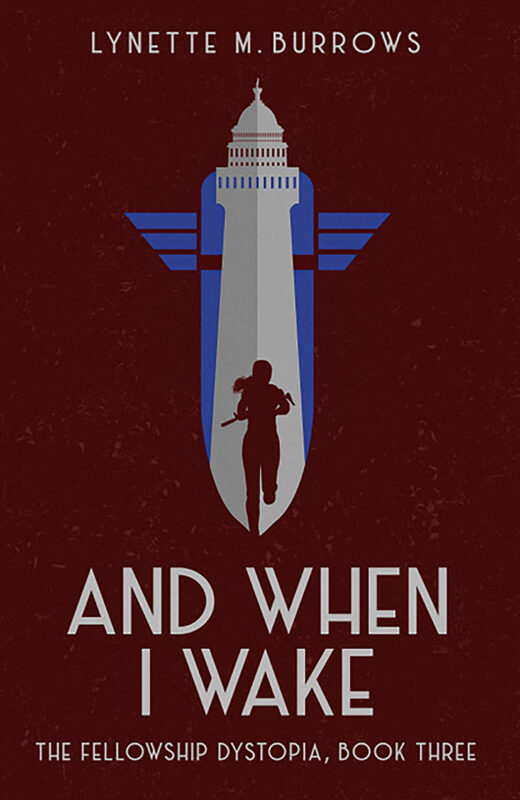
When your greatest enemy is your own sister, can you save a nation without losing your soul?
More info →







AN ELEMENT OF MYSTERTY: SWEET, FUNNY, AND STRANGE TALES OF INTRIGUE
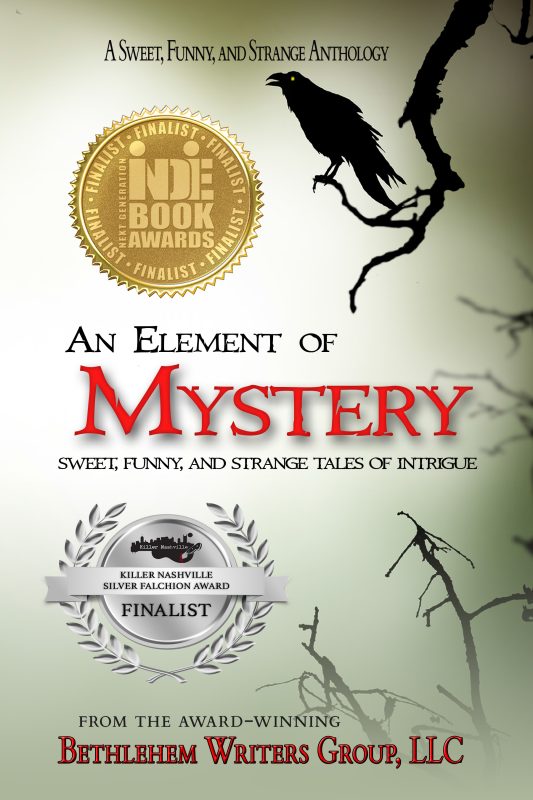
Dare you read our latest Sweet, Funny, and Strange® Anthology?
More info →